1-1 online sessions with a qualified expert
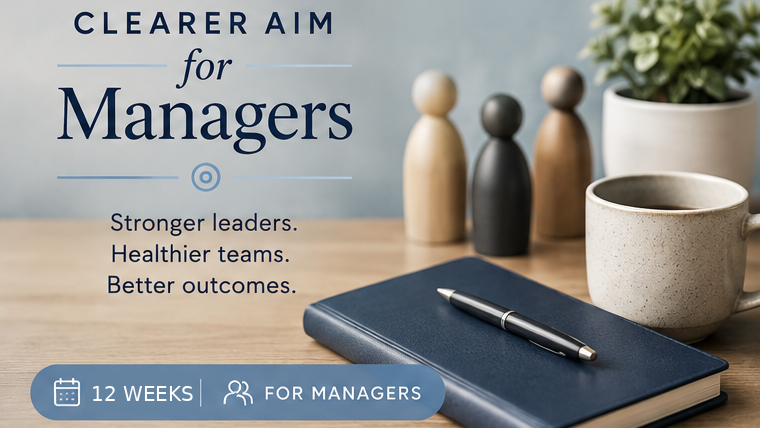
Clearer AIM: Individual Coaching for Managers

by Melanie Gallo PhD NBC-HWC
Workplace Mental Health Coach and Business Psychology Consultant

Overview
What you'll achieve
Greater awareness of the patterns influencing your reactions, interpretations, and leadership decisions
Increased ability to pause and respond more intentionally in difficult or high-pressure situations
Greater confidence navigating challenging employee conversations
More effective communication, feedback, boundaries, and accountability
Stronger ability to address conflict and team tension before problems escalate
Greater clarity about what is yours to manage as a leader and what belongs to the employee
Practical strategies for supporting employees without stepping into the role of therapist
Increased awareness of team dynamics, trust, and psychological safety
Greater confidence applying what you are learning to real leadership situations
Progress toward the leadership and WorkLife goals identified at the beginning of coaching
Who this is for
New or experienced managers who want to strengthen their people-leadership skills
Leaders navigating difficult employee conversations, feedback, or accountability
Managers dealing with conflict, tension, trust issues, or recurring team friction
Leaders who find themselves carrying employee problems long after the workday ends
Managers who want to support struggling employees without taking on responsibility that is not theirs
People leaders navigating change, uncertainty, shifting expectations, or increased responsibility
Managers who want to communicate more clearly and respond more intentionally under pressure
Leaders who recognize that their own reactions can influence team climate and want to better understand those patterns
Managers who want an evidence-informed coaching process tailored to real leadership situations rather than a generic leadership curriculum
What's included
12-week private coaching engagement
Six live 60-minute coaching sessions (choice of video or phone), generally scheduled every other week
Two additional 30-minute phone coaching sessions to use during the 12-week engagement
Collaborative goal-setting and individualized coaching grounded in the Awareness Interpretation Model
Coaching focused on both personal leadership patterns and current people-management challenges
Support with difficult conversations, feedback, accountability, boundaries, conflict, and team dynamics as relevant to your role
Worksheets, exercises, reflection tools, and other resources selected to support your goals
Vibly notes for reflection, with the option to keep notes private or share selected notes with me
Direct chat access for brief questions and clarifications, plus progress check-ins and final reflection
What you'll need
Verified Top Expert
Melanie Gallo PhD NBC-HWC
Workplace Mental Health Coach and Business Psychology Consultant
Metro Atlanta Area, United States
10 years experience
A workplace moment can look simple from the outside.
An email arrives without context. A manager says, “Can we connect?” A colleague makes a face during a meeting. A client changes the expectations. Someone does not respond as quickly as anticipated. Then the mind begins filling in the missing information.
What did they mean? Did I do something wrong? Are they questioning my work? Am I being dismissed?
Before long, a small moment can become stress, avoidance, defensiveness, conflict, overthinking, or another entry on what I call the invisible invoice of Relational Debt. That moment before the reaction is where much of my work begins.
I am Dr. Melanie C. Gallo, a Business Psychology PhD, National Board Certified Health and Wellness Coach, workplace mental health strategist, and founder of Your WorkLifeJoy™️ Coach.
Across more than 10,000 individual coaching sessions, I have worked with professionals navigating stress, anxiety, communication challenges, competing responsibilities, behavior change, leadership demands, career decisions, burnout risk, and the very human habit of reacting before we fully understand what is happening.
My coaching combines the science of behavior change with practical workplace application. I draw from business psychology, cognitive behavioral approaches, motivational interviewing, positive psychology, strengths-based coaching, and nationally recognized health and wellness coaching competencies.
I am also the creator of the Awareness Interpretation Model, (or AIM), and the author of the forthcoming book That Escalated Quickly: What’s really happening when things go sideways at work. Using my AIM framework, I help clients examine what they noticed both mentally and physically in tough moments, how they interpreted the moment, what shaped that interpretation, how the interpretation influenced their reactions, and what response would better serve them moving forward.
This is not about suppressing emotions, pretending everything is fine, or becoming endlessly agreeable. It is about understanding your internal process well enough to make a more intentional choice that causes less internal and external friction.
My style is thoughtful, practical, calm, and appropriately challenging. Clients often bring complicated situations into coaching. My role is to help make the situation easier to see, easier to understand, and easier to act on. You do not need to arrive with perfect goals or the right language. We can begin with what is happening now, even if "I have no idea what is happening" is all you know right now.
Coaching Style and Scope
Calm and grounded; insightful without being overly clinical; structured without being rigid; compassionate without avoiding accountability; practical and action-oriented; curious and nonjudgmental; evidence-informed; responsive to the whole person and the realities of work. I also make room for humor when appropriate, because sometimes the most honest description of a workplace experience really is, “Well, that escalated quickly!”
Coaching is a collaborative, forward-focused process that supports awareness, learning, decision-making, behavior change, and goal-directed action. Coaching is not psychotherapy, medical treatment, crisis care, legal advice, diagnosis, or a substitute for services from a licensed healthcare or mental health professional. I do not diagnose clients or their coworkers. When a need falls outside the scope of coaching, I will encourage the client to seek support from an appropriately qualified professional.
Curious about coaching but not sure where to start? My Cruise to WorkLifeJoy™ course is a structured, action-oriented first step to help you get clearer about what matters, what feels off, and what you want to change. For anyone who wants to experience the reflection, clarity, and action of coaching before deciding whether one-on-one coaching is right for them. You're invited to sign up here today!
"FAQs
Still need more clarity? Here are answers to some commonly asked questions.
How is this different from Clearer AIM Individual Coaching?

Clearer AIM Individual Coaching focuses primarily on your own WorkLife goals, patterns, reactions, communication, and decisions.
Clearer AIM for Managers includes that same individualized work while also addressing the added responsibility of leading other people. Coaching may include employee conversations, feedback, accountability, conflict, team dynamics, psychological safety, boundaries, and other people-leadership challenges.
Do we work through all five AIM areas?
Not necessarily. Thoughts, emotions, personality patterns, core beliefs, and pressure are areas that can influence how we interpret and respond to situations. We will focus on the areas most relevant to your leadership goals and current challenges rather than following a predetermined curriculum.
Is this leadership training?
Not exactly. This is individualized coaching rather than a standardized leadership course. We work with the situations, patterns, and leadership challenges that are most relevant to you.
Can I bring current employee or team situations into coaching?
Yes. Real leadership situations often provide useful material for coaching. We can explore how you are interpreting the situation, how you want to respond, and what next steps may be appropriate while maintaining appropriate confidentiality and professional boundaries.
Can this help me support employees who are struggling?
Yes, within the scope of coaching. We can explore how to communicate supportively, set appropriate boundaries, recognize when an issue may be outside your role, and avoid becoming the employee's therapist or counselor.
How often will we meet?
The program includes six 60-minute coaching sessions over 12 weeks, generally scheduled every other week. You will also have two additional 30-minute phone coaching sessions that can be used during the engagement when a leadership situation would benefit from more timely support.
Can I choose phone instead of video?
Yes. Your regular scheduled coaching sessions may be completed by video or phone, and you may switch formats based on what works best for a particular session. The two additional 30-minute sessions are conducted by phone.
What happens between sessions?
You may use the Vibly notes feature to capture reflections, situations, or ideas you want to remember for your next coaching session. Notes can remain private or be shared with me if you would like me to review them before we meet.
You may also use chat for brief questions between sessions. More complex topics or situations that require deeper coaching will be addressed during your next scheduled session. I will respond within 24-48 business hours.
How is coaching different from therapy
Coaching can include conversations about stress, emotions, thoughts, relationships, and other factors that affect your WorkLife and leadership. The focus, however, is on helping you increase awareness, clarify what you want to change, identify practical strategies, and take action toward your goals.
Coaching does not diagnose or treat mental health conditions and is not a substitute for psychotherapy or other mental health treatment. If something comes up that would be better addressed by a licensed mental health professional or another healthcare provider, we can discuss appropriate next steps while keeping our coaching work within its intended scope.